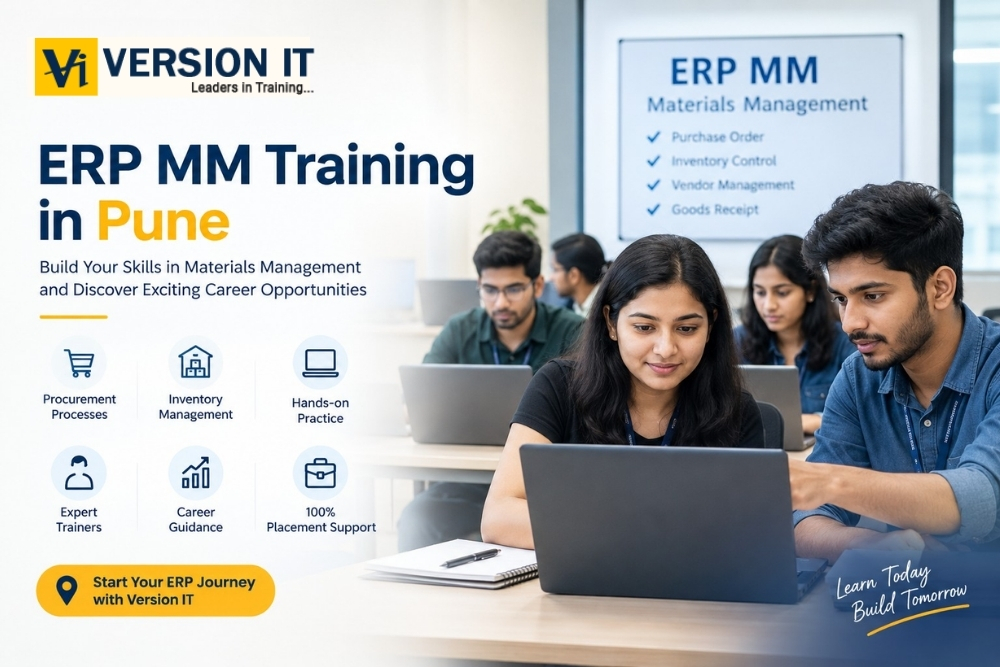
Choosing the right technology skill can make a significant difference when starting or advancing a career in enterprise software. Materials management is one area that continues to be important for organizations that purchase materials, maintain inventory, manage vendors, and coordinate business operations. For students and professionals interested in this field, ERP MM Training in Pune can provide a structured way to understand how procurement and inventory activities work within an enterprise environment.
Version IT offers career-focused training designed to help learners understand materials management concepts through practical examples and guided learning. Instead of concentrating only on theoretical definitions, students can build an understanding of how different business activities connect with one another.
Why Learn ERP MM?
Materials management is closely connected with several everyday business processes. A company needs to purchase the right materials, work with suppliers, maintain appropriate stock levels, track goods movements, and ensure that materials are available when required.
An ERP MM professional helps organizations manage these activities systematically through enterprise software. Learning this area can therefore be useful for students from commerce, business, supply chain, logistics, or technical backgrounds.
A good training program can help beginners understand both the business side and the system-based approach used to manage procurement and inventory.
What Do Students Learn in ERP MM Training?
A well-structured ERP MM course should move from basic concepts to practical business scenarios. Students can start by understanding how procurement and inventory processes operate before moving into system-level activities.
Important areas generally include:
- Enterprise and organizational structures
- Master data concepts
- Material master
- Vendor or supplier-related data
- Purchasing processes
- Purchase requisitions
- Purchase orders
- Goods receipts
- Invoice verification
- Inventory management
- Stock transfers
- Goods movements
- Physical inventory
- Pricing and purchasing conditions
- Procurement-related reporting
- Integration with other business functions
Understanding these topics individually is useful, but knowing how they connect in a complete business process is even more important.
Practical Learning Matters for Students
One common challenge for beginners is understanding how classroom concepts relate to actual business operations. Reading about a purchase order, for example, is different from understanding why a company creates one, what information it contains, and what happens after the order is processed.
Practical training can bridge this gap.
During ERP MM Training in Pune, students can work through business-oriented examples such as purchasing materials from a supplier, receiving goods into inventory, checking stock, and processing invoices. These scenarios help learners understand the sequence of activities rather than memorizing individual transactions.
Practical exposure can also make it easier for students to explain their knowledge during interviews.
Who Can Join ERP MM Training?
ERP MM is not limited to students with a specific academic background. The course can be considered by:
- Fresh graduates looking for an enterprise technology career
- Commerce and management graduates
- Supply chain and logistics professionals
- Procurement professionals
- Inventory and warehouse professionals
- Working professionals looking to move into ERP roles
- Candidates interested in enterprise application consulting
Basic knowledge of business processes can be helpful, but beginners can start by learning the fundamentals step by step.
ERP MM Career Opportunities
After developing a strong understanding of procurement and materials management processes, learners can explore different career paths depending on their background, experience, and additional skills.
Potential roles may include:
- ERP MM Consultant
- Materials Management Consultant
- Procurement Analyst
- Supply Chain Analyst
- Inventory Management Professional
- Purchasing Specialist
- ERP Support Associate
- Functional Consultant
Career growth generally depends on more than completing a course. Practical knowledge, communication skills, business-process understanding, problem-solving ability, and experience with real-world scenarios can all influence professional development.
Why Choose Training With Version IT?
Version IT focuses on helping learners understand enterprise applications through structured and practical training. For students starting from the basics, the learning process can be organized around concepts, business processes, practical exercises, and interview preparation.
The objective is not simply to complete a syllabus. Students should gradually develop the ability to understand a business requirement and identify how the ERP system can support that requirement.
Training can also be useful for candidates who want to strengthen their understanding before applying for entry-level ERP positions.
How to Prepare for an ERP MM Career
Completing training is only the first stage of career preparation. Students can improve their readiness by following a consistent learning approach.
First, understand the fundamentals of procurement and inventory management. Next, practice complete business scenarios instead of studying individual topics separately. Once the fundamentals become comfortable, focus on integration with related business functions.
Students should also work on explaining processes in simple language. During interviews, recruiters may ask candidates to describe how a procurement cycle works rather than asking only for definitions.
Creating a small collection of practical scenarios and revising them regularly can therefore be valuable.
Is ERP MM a Good Choice for Freshers?
For students interested in procurement, supply chain, inventory, and enterprise applications, ERP MM can be a practical specialization to explore. The field combines business-process knowledge with technology, making it suitable for learners who enjoy understanding how organizations manage materials and purchasing activities.
Freshers should keep their expectations realistic, however. A training certificate alone does not guarantee employment. Building practical knowledge and developing the ability to discuss real business scenarios are equally important.
Final Thoughts
The demand for organized procurement, inventory control, and supply chain processes makes materials management an important area within enterprise operations. Students who develop both functional knowledge and practical understanding can create a stronger foundation for an ERP-focused career.
If you are searching for ERP MM Course in Pune, choosing a program that combines fundamentals, practical scenarios, business-process understanding, and career preparation can make the learning journey more useful.
Version IT provides structured ERP-focused training to help students understand materials management concepts and prepare for professional opportunities. With consistent practice and a clear learning path, students can build the knowledge needed to take their first steps toward a career in ERP and supply chain technology.